proscenium
{ an odyssey in 13 short stanzas }
sat to the side, the boy looked to the stage nearby, at his life. as if from a vast distance, and across the prelapsarian chasm of time. and what he saw both numbed and enchanted him.
there were lights: shafts, cones, ziggurats, whimsies, dust devils of them dancing flittingly about on the floor, insouciant and knowing, glancing knowingly at the boy from time to time
as if alive. as alive as he was, tendering a kind of wisdom long ago lost to the winds, the riverine eddies, the rills, the secret pronouncements of nature, the hushed whispering at the escarpment
of things. but who was whispering what? knelt to the side, the young man grimaced, as if realizing something for the first time except it felt so old, so arcane, so weathered into the smoothness
of a stone sent bankward by the river’s inscrutable flow, set there at least for a time. well, he thought, this is what one does. one runs. one takes up the arms of righteousness. one objects
to what is assumed is the way of things. one reads, one picks up languages like so many easy twigs, admonishing the powerful and the powerless alike, in a kind of youthful hubris.
and once the ancient books are taken up, then set aside, more modern ones are thumbed through, with fingering like scales on that early pianoforte, considered, embraced, reified until
meaning itself became obscure and the concerns of a man middle-yeared and unrunning on earth becomes moored to the song of opening doors to the younger selves in his midst, a life. a career.
a calling. a writing. a sense of being. and then, the universe set a miracle on him, still on the edge of the stage— unwitting fatherhood, a child, a sensation, indigenous, a gift. dancing now, he claims
the story of the marginal and the set-upon, the vanquished and unwilling, the orphaned working poor of the modern story, the long-lost family until, at the cusp of his olden years and the
unbearable lightness of a last arc, a last light, the once-upon-a-time boy finally awakens to the true dancing upon the true stage: it is him, the wayang shadows on the wall come alive as if by magic
but really is just the self attending to the logic and intuition of the thing: one step at a time, one breath, one grasp, one look, one flowing apparition that is more real than all the years before
when light didn’t know it was to become roseate at the cusp of day, the nautical twilight of dawn giving way to the next arc in the story, the dance, the running, the blessing, the who.
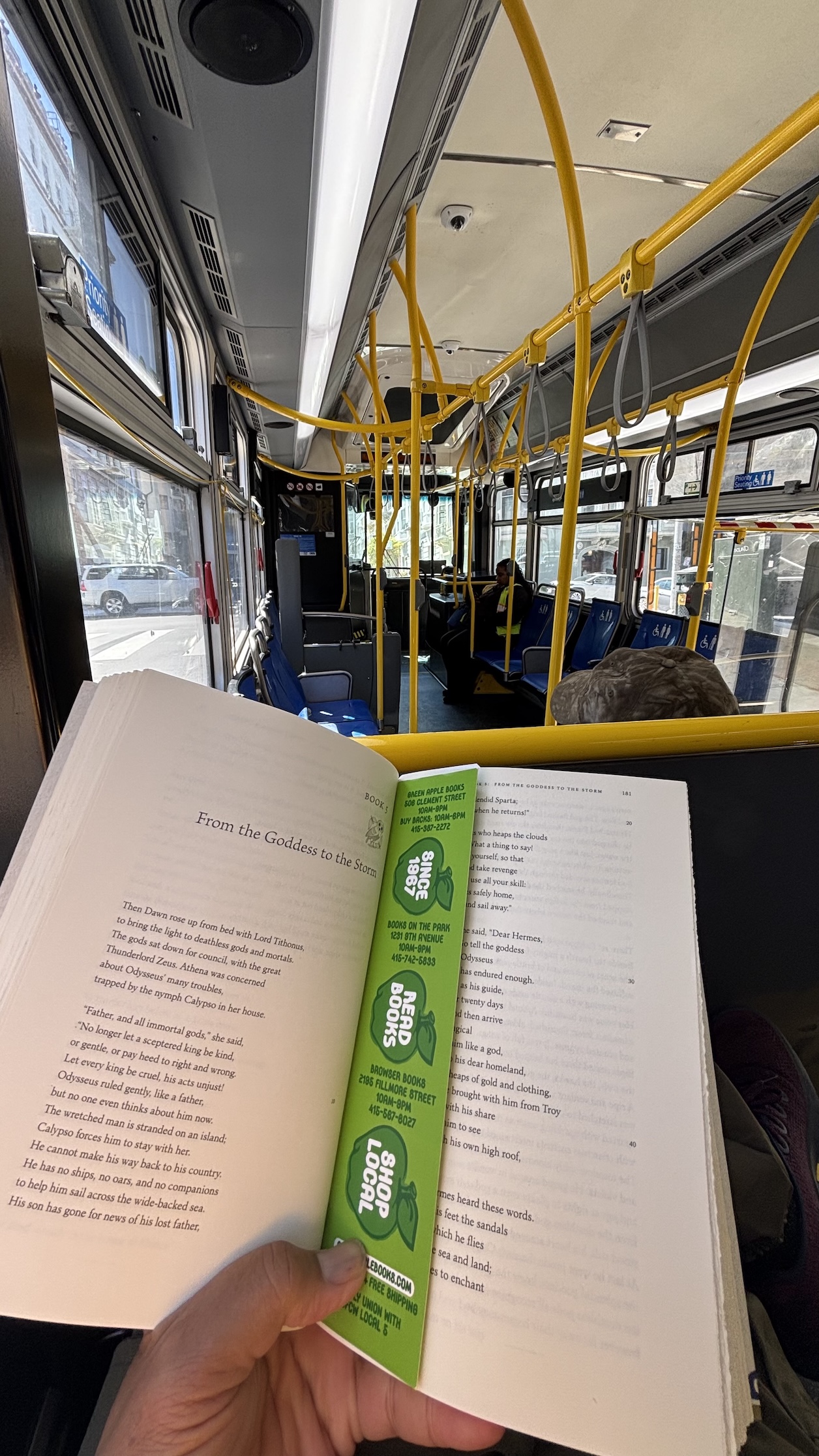
[ Started reading Book 5 of Emily Wilson's translation of The Odyssey on the 19 Shipyard toward noon today... ]