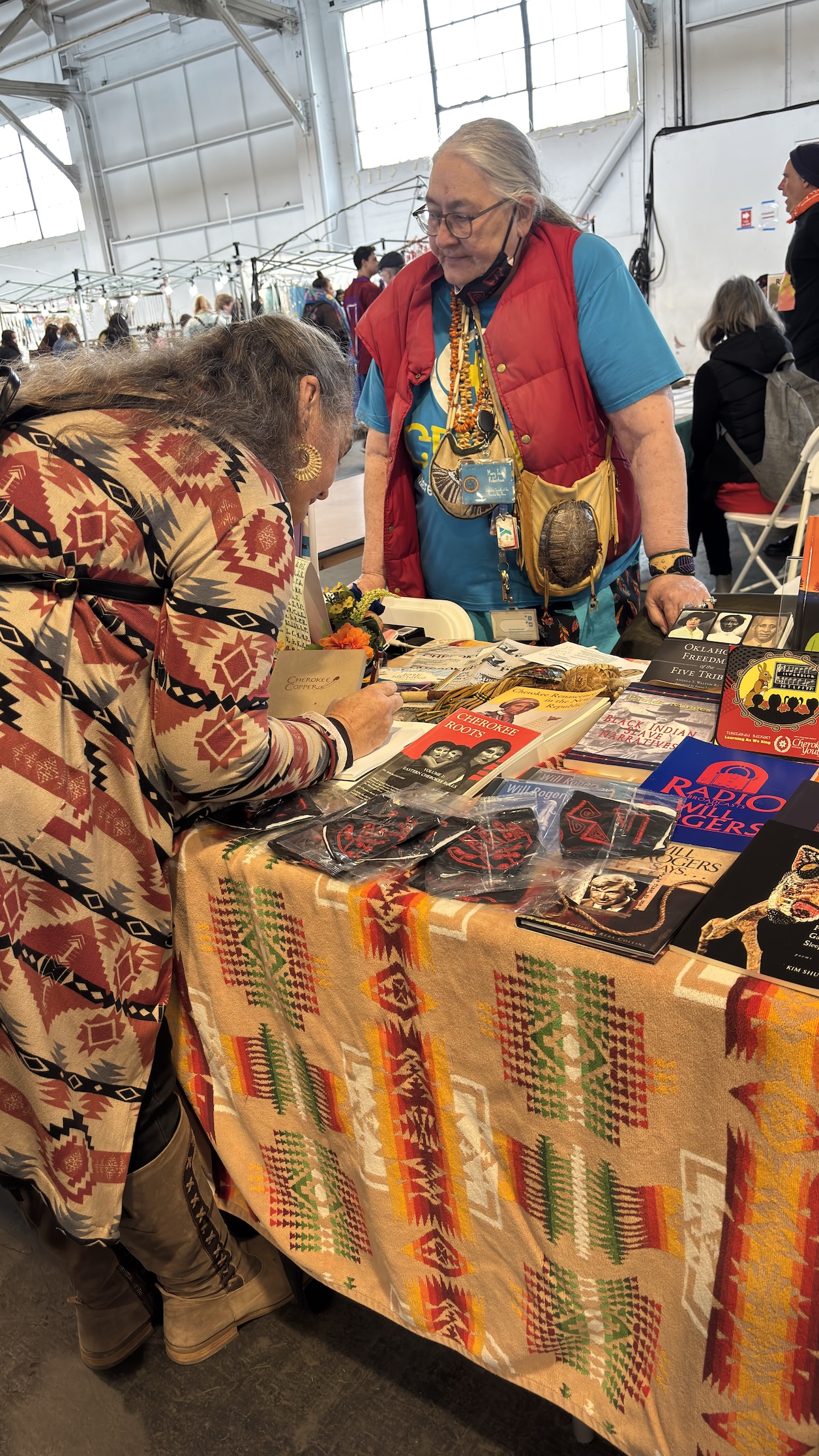
endangered language continuity: a feminine domain
Now reading the Introduction to Flutes of Fire. Here's a list of native speakers of indigenous California languages that Hinton mentions, just in the first few pages:
- Mary Jones — Konkow Maidu
- Laura Somersault — Wappo
- Bertha Mitchell — Patwin (Wintu)
- Elizabeth Meadows — Rumsen Ohlone
- Rosario Cooper — Obispeño Chumash)
- Della Prince — Wiyot
- Villiana Hyde — Luiseño
- Essie Parrish — Kashaya Pomo
- Laura Fish Somersal — Wappo
- Ray Baldy — Hupa
- Florence Jones — Winto
- Agnes Vera — Yowlumni
- Violet Super — Karuk
- Ralph Luther Girado — Kawaiisu
- Claude Lewis — Mojave
- Verdena Parker — Hupa
- Linda Yamane — Rumsen Ohlone
- Katherine Siva Saubel — Cahuilla
- Pyuwa Bommelyn — Tolowa
- Muriel X. Ammon — Tsnungwe
...and one can't help but observe that it's a list that's predominantly female. What could the possible explanation for this be?
From Claude:
|
There's a well-documented pattern here, and it's not coincidental. In many California Native communities — and indigenous communities more broadly — women were more often the last keepers of the language. Several factors converge to explain this.
Men were more likely to be pulled into wage labor, military service, and English-speaking work environments during the nineteenth and twentieth centuries. Women, particularly grandmothers and elder aunties, were more often in the home and in the community, speaking the language with children and with each other. When the boarding school era forcibly removed children and punished them for speaking their languages, the women who stayed behind — or who returned — carried the words that survived. There's also a dimension of care work. Language transmission happens in intimate settings — lullabies, cooking, storytelling, daily instruction. That labor fell disproportionately to women in most of these communities. When the transmission chain was broken by colonization, the last links that held were often the women's links. |
From Number 1:
|
A linguist like Hinton isn’t just doing random sampling; she’s working through trust networks. Those networks often run through the women who are already recognized locally as “the ones who remember the old ways” — the basketmaker, the storyteller, the songkeeper, the one people already bring questions to.
So when Hinton writes that introduction, she’s drawing heavily on precisely those figures — the women who hosted her at their kitchen tables, corrected her pronunciations, and decided which stories could even be spoken aloud to a white linguist with a tape recorder. It’s not that men weren’t around; it’s that the role of “language elder” had, by that time, become gendered. There’s also a quieter thing under all this: in communities where institutions, governments, and churches were overwhelmingly run by men, the “counter-institutions” of memory often formed around women. You saw a version of that at BAAITS — the auntie in the wheelchair whose blessing gave you permission to photograph. She’s not just one person; she stands in for an entire pattern: the ones who sit close to the drum, who know which songs go where, who decide what can be shared and what stays in the circle. |
...it all makes perfect sense, doesn't it?